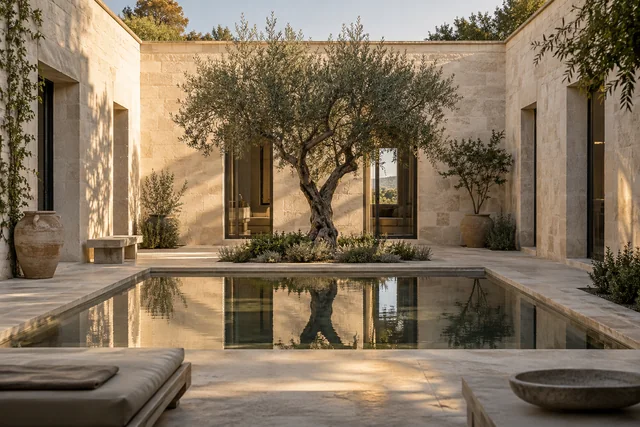
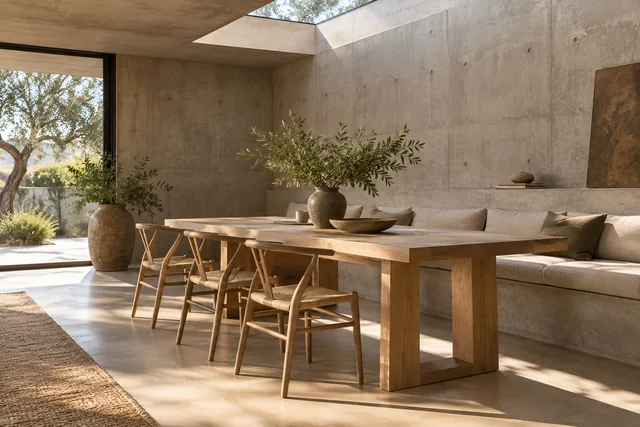
A material palette begins with the building
A material palette becomes more coherent when it responds to the existing building. Before choosing samples, record the light, proportions and surfaces that are already there. The most interesting decision may be what to keep.
Make an honest inventory
Photograph the existing materials in neutral light and note their condition. Separate a surface that needs repair from one that simply looks unfamiliar. Identify which elements are structural, historic or otherwise subject to professional review. This inventory keeps the design grounded in the actual site rather than a collection of unrelated reference images.
Compare samples together
Place candidate materials beside each other and beside the retained surfaces. Look at them in daylight and under the proposed artificial lighting. Small samples can conceal variation, so ask how a finish behaves across a larger area. Consider texture, joints and edges as carefully as colour; these are the details people meet at close range.
Include the life after handover
Discuss cleaning, repair, replacement and the way a material may change over time. Record the exact specification and the maintenance information supplied by the manufacturer. A beautiful finish that cannot be maintained within the project’s needs is not a resolved choice. The final palette should explain its relationship to use, not merely its resemblance to a moodboard.